
Something happens when you are in a garden, when you garden — something beyond the tactile reminder that, in the history of life on Earth, without flowers, there would be no us.
from Pocket https://bit.ly/3KROzF6
via IFTTT

What I see when I get a moment to pause and make a little sense of the world
Something happens when you are in a garden, when you garden — something beyond the tactile reminder that, in the history of life on Earth, without flowers, there would be no us.
from Pocket https://bit.ly/3KROzF6
via IFTTT

“The body provides something for the spirit to look after and use,” computing pioneer Alan Turing wrote as he contemplated the binary code of body and spirit in the spring of his twenty-first year, having just lost the love of his life to tuberculosis.
from Pocket https://bit.ly/3KRYlXI
via IFTTT

“Time is being and being time, it is all one thing, the shining, the seeing, the dark abounding,” Ursula K. Le Guin wrote in her splendid “Hymn to Time” shortly before she returned her borrowed being to eternity.
from Pocket https://bit.ly/3kGBrbm
via IFTTT

A passionate lifelong gardener, the poet had fallen under the spell of wildflowers while composing her astonishing herbarium as a teenager.
from Pocket https://bit.ly/38OL84E
via IFTTT

Goethe observed in his theory of color and emotion, “not because it advances to us, but because it draws us after it.
from Pocket https://bit.ly/2OAnsS5
via IFTTT
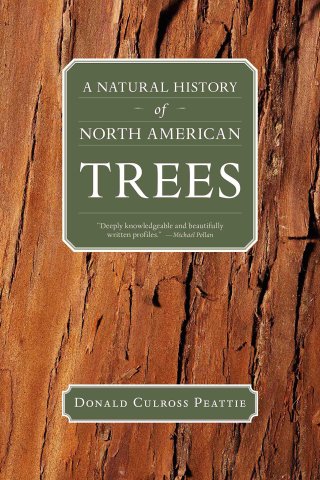
“A tree is a little bit of the future,” Wangari Maathai reflected as she set out to plant the million trees that won her the Nobel Peace Prize.
from Pocket https://bit.ly/3vJWw9I
via IFTTT

While the trailblazing astronomer Maria Mitchell was contemplating social change and the life of the mind and her contemporary Walt Whitman was instructing America’s young on what it takes to be an agent of change, on the other side of the globe, the poetic and politically wakeful scientist Peter
from Pocket https://bit.ly/3rQ2rZM
via IFTTT

“The high value put upon every minute of time, the idea of hurry-hurry as the most important objective of living, is unquestionably the most dangerous enemy of joy,” Hermann Hesse wrote at the dawn of the twentieth century in trying to course-correct the budding consumerist conscience toward the
from Pocket https://bit.ly/2PbTsPT
via IFTTT

The thrill of childlike wonder never left Kathleen Lonsdale (January 28, 1903–April 1, 1971), who often ran the last few yards to her laboratory and took her mathematical calculations into the maternity ward where her children were born.
from Pocket https://bit.ly/3JU5dmT
via IFTTT

In her 1942 book Philosophy in a New Key, the trailblazing philosopher Susanne Langer defined music as “a laboratory for feeling and time.” But perhaps it is the opposite, too — music may be the most beautiful experiment conducted in the laboratory of time.
from Pocket https://bit.ly/3rBe3zB
via IFTTT
 Front Porch Reflections
You must be logged in to post a comment.