
It bears repeating that what makes life livable is our ability — our willingness — to move through the world wonder-smitten by reality.
from Pocket https://bit.ly/43jQ8F3
via IFTTT

What I see when I get a moment to pause and make a little sense of the world
It bears repeating that what makes life livable is our ability — our willingness — to move through the world wonder-smitten by reality.
from Pocket https://bit.ly/43jQ8F3
via IFTTT

In 2002, Florida adopted a phonics based reading strategy due to Charlie Crist. Scores started to rise. Other southern states started to following suit, including Mississippi long deried as the worst in the nation.
from Pocket https://bit.ly/3q6Y5zf
via IFTTT
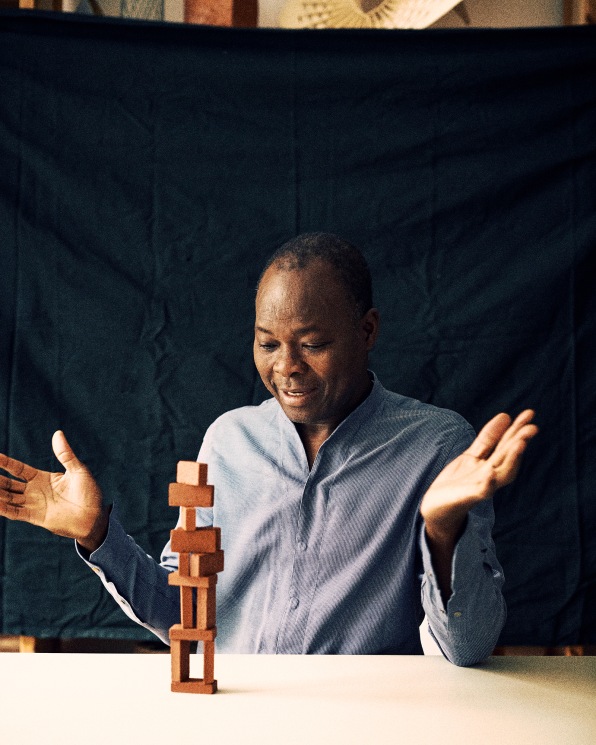
Having grown up in a village without a school, Diébédo Francis Kéré, who was just awarded the Pritzker Prize for architecture, has been promoting education for more than 20 years.
from Pocket https://bit.ly/3qh10mg
via IFTTT

(RNS) — As last week’s arguments in Carson v. Makin show, the U.S. Supreme Court seems to be more and more sympathetic to government funding of education at religiously affiliated schools.
from Pocket https://bit.ly/3tcgavB
via IFTTT
“Last Week Tonight with John Oliver” takes on the current addiction to standardized testing and suggests that politicians and test providers be put to the same standard.

So how do you weigh a fish in an elevator? (And why bother?)
The following is a critique of our tendency to look for structural and technical processes to change what is ultimately a relational enterprise. How kids play on the playground, how a teacher interacts with the children, how we relate to “neck up” learners and “neck down” doers shape the process.
Over the last week or two when Secretary of Education Arne Duncan was on NPR’s “Talk of the Nation” and Bill Gates and D.C. schools Chancellor Michelle Rhee were on Oprah, I have been reading Deborah Meier, Brenda Engel, and Beth Taylor’s wonderful new book, Playing for Keeps: Life and Learning on a Public School Playground. The book is a record of children playing during recess at Mission Hill School in Boston. A simple framework and a simple focus: What do kids do when they play? The resulting book, though, is anything but simple, for the authors demonstrate the intelligence and imagination that is tapped during play, and they use this rich record to argue for a capacious and humane understanding of the role of play in children’s lives. And this argument, in turn, is embedded in a broader one about the need to acknowledge this intellectual and imaginative richness in current education policy, a policy that seems hell-bent (my phrasing) on advancing a very different approach to education and child development.
As I read Playing for Keeps, I keep thinking about how little we see in current reform efforts that reflect Meier, Engel, and Taylor’s view of children. You won’t find much of school life in NCLB or Race to the Top; in fact, you’ll be hard pressed to find a single example of a teacher thinking through a lesson or interacting with a child or a child learning a scientific concept or being engaged with a book. What we do have is a technocratic and structural approach to education, and sadly it has become the coin of the realm.
 Front Porch Reflections